
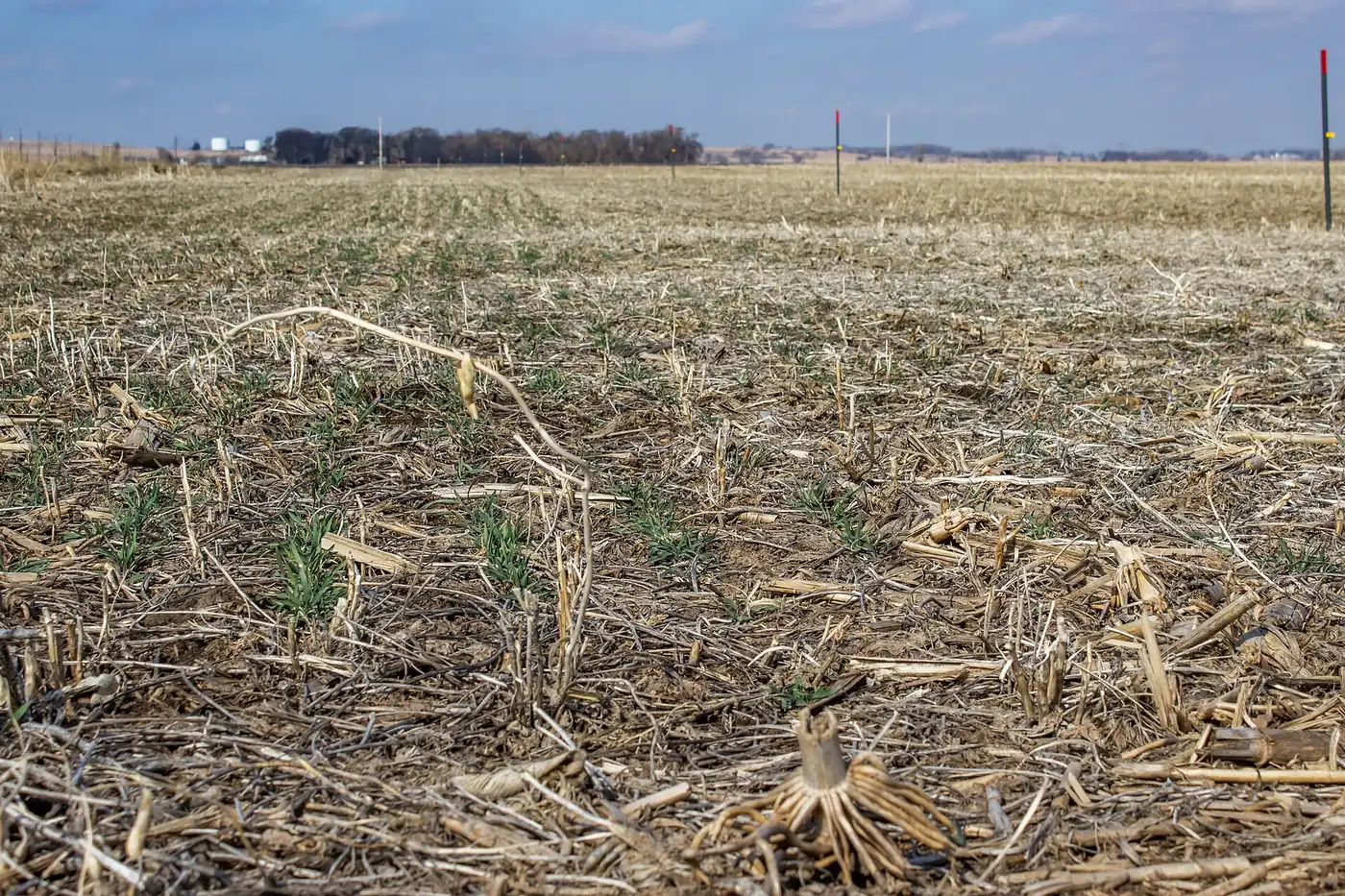
Sandy Soil & No-Till
Much of Waushara County sits in Wisconsin’s Central Sands. Water and nutrients run right through that ground, so the plot plan has to change. These guides cover the dirt, the cover, and the no-till field notes from our own plots.
Start here
- Know your soil first. Look up your soil series on the free USDA-NRCS Web Soil Survey. Soils like Plainfield sand are excessively drained. What sand does to a plot.
- The usual sand problems, per UW–Madison Extension: low organic matter (typically under 2%), low pH (commonly below 6), sulfur deficiency, and drought on top of it.
- Grains are the base. Winter rye is the workhorse on sand. Oats are the early-fall draw and winter-kill. Clover goes in only where the pH has been fixed.
- Why no-till. Residue shades the soil and slows evaporation, covered soil stays put, and leaving buried weed seed buried is one of the simplest weed controls there is. No-till starting point.
- You still have to manage what’s growing: herbicide by the label, roller-crimping a tall cover like cereal rye, or throw-and-mow. Our spray, crimp, no-till notes show how that played out on dry sand.
Articles & field notes
- Best Food Plot Mix for Sandy Soil in Central WI
What to plant on Central Sands food plots in Waushara, Adams, and Marquette counties: winter rye, oats, and brassicas, plus the pH and sulfur issues sand brings.
- No-Till Food Plots in Central Wisconsin
How no-till food plots work on Central Wisconsin ground: site choice, soil tests, terminating cover, seed-to-soil contact, and realistic expectations.
- Spray, Crimp, No-Till: Summer Mix Results
Two smaller sandy plots in a dry year: how the summer mix mat looked, and why we sprayed, crimped, and drilled the fall mix into it.
- No-Till Food Plot Results: Fall Mix, WI
A walk through this year's fall mix after spray, crimp, then no-till: what came up, the spots the drill missed, and what we would do again.
- One Seed Box on Hard Soil: Green Lake Food Plot
We no-till drilled a Green Lake food plot with one main seed box on hard, dry ground. Here's the setup, the concern, and what we saw a few days later.
- Wisconsin Soil-Building Cover Crop Mix
A Wisconsin summer mix for building soil: what to keep, swap, and drop, three regional recipes, planting dates, crimp timing, and seed costs.
- Central Wisconsin Food Plot Seed Blends
A drought-tough summer blend and a pea-heavy, low-rye fall blend for Central Wisconsin sand, with planting dates for Waushara, Adams, and Portage.
- How to Soil Test a Food Plot in Wisconsin
A step-by-step guide to pulling a food plot soil sample in Wisconsin and making sense of pH, phosphorus, potassium, organic matter, and lime recommendations.
Tools & help
No-till food plot planning Free Food Plot Map
Looking for a used no-till drill or a roller-crimper? Check food plot equipment for sale on the Land Board.
Sources
Facts on this page are summarized from the Wisconsin Dirt articles linked above and from these public sources. Check the current version before you act on anything.
- USDA-NRCS Web Soil Survey
- UW–Madison Extension Crops and Soils, Growing great pasture and forage in sandy soils
- UW–Madison Extension, The important role of soil texture on water
- USDA-NRCS Wisconsin, Cover Crop (340) Guidance Document, 2026 (PDF)
- UW–Madison IPCM, Using the roller-crimper system
- UW–Madison Extension, Full or Late Season Cover Crop Options on Wisconsin Prevented Plant Acres
- UW–Madison Extension, A1525 Table 13: Planting rate and date for forages in Wisconsin (PDF)