
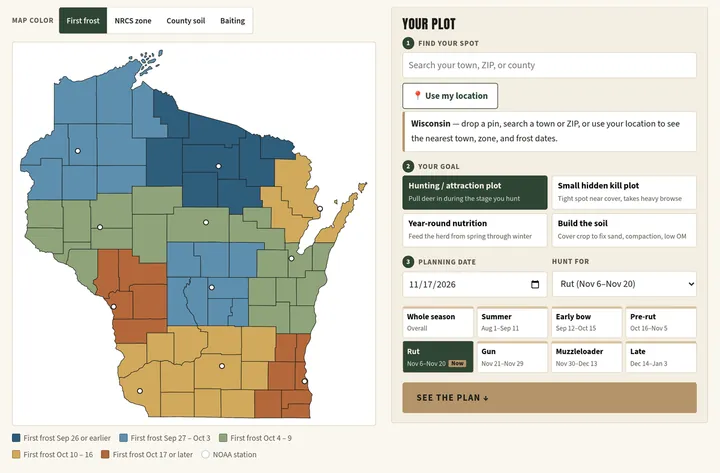
Part of our Wisconsin Food Plots guide — dates, seed and soil by season.
On droughty Central Sands ground, the best food plot mix is the one that survives August. For most of our ground that means a cereal-grain base (winter rye and oats) with a modest brassica component, and clover only where the pH has been fixed.
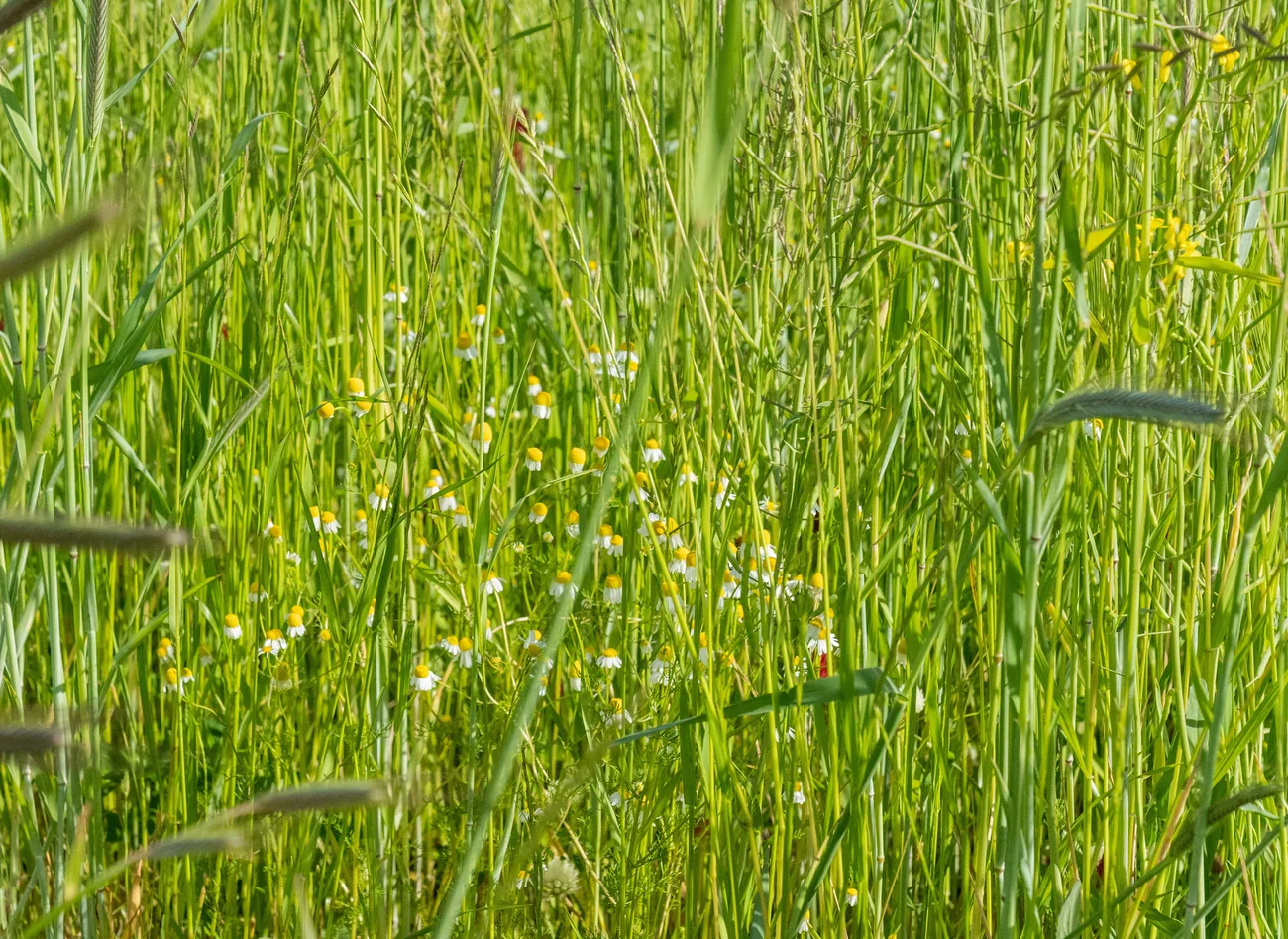
Much of Waushara County sits in Wisconsin's Central Sands. Soils like Plainfield sand are excessively drained: water runs right through them, and so do nutrients. That changes what a "good" food plot mix looks like. A blend that thrives on a southern Wisconsin silt loam can burn up here by late August.
What sand does to a food plot
UW–Madison Extension lists the usual problems with forage on sandy soil:
- Low organic matter, typically under 2%, so the soil holds little water or nitrogen.
- Low pH. Sandy fields commonly test below pH 6, which keeps many forage species from establishing. Lime fixes it, and the rate should come from a soil test (see how much lime a food plot needs; sands under 1% organic matter get lower UW rates).
- Sulfur deficiency, which often gets mistaken for a nitrogen problem when plants stay pale.
- Drought on top of all of it.
Our go-to base: cereal grains
Winter (cereal) rye is the workhorse on sand. It is cold-hardy, germinates in cool weather, holds the soil against wind erosion (one reason Central Sands vegetable growers plant it after harvest), and stays green into late fall and again early in spring. UW Extension's forage guidance uses 90–112 lb per acre for good yield when planted on time, with heavier rates for late plantings.
Oats are the early-fall draw. They come up fast and deer hit them hard in October, but they winter-kill, which is why we pair them with rye.
Add brassicas, but don't lean on them
Turnips and radishes add late-season food after frost. On dry sand, though, a pure brassica plot is a gamble: it needs to be planted by late July or early August and then needs rain. We'd rather use a smaller brassica share inside a grain blend so the plot still works in a dry year. Timing details are in when to plant brassicas in Wisconsin.
Clover only where pH is fixed
Perennial clovers can be great on sand once the pH is corrected and the plot has some organic matter built up. On raw, acidic sand they usually thin out. Fix the pH first, often with a rye cover in the meantime, and add clover later.
An example fall blend (a starting point, not a prescription)
| Component | Role | Notes |
|---|---|---|
| Winter rye | Base, soil cover, late and early-spring forage | UW range 90–112 lb/acre when planted alone; cut the rate when blending |
| Oats | Early-fall attraction | Winter-kills; residue protects the soil |
| Turnip and/or radish | Late-season food after frost | Small seed, plant shallow; keep it a minor share on dry ground |
Follow the seeding rates on your seed tag for blends, and follow every label for any herbicide you use.
Why no-till helps on sand
Every pass with a disc dries the seedbed and burns off organic matter that sand can't spare. Spraying, drilling into the standing cover, then crimping it down keeps residue on the surface to hold moisture and build soil over time. We go deeper on that in no-till food plots in Central Wisconsin and spray, crimp, no-till.
Want a mix and a plan for your own ground? Talk with us about a consultation.
Sources
- UW–Madison Extension Crops and Soils, Growing great pasture and forage in sandy soils, can it be done?
- UW–Madison Extension, Planting Winter Rye after Corn Silage (seeding rates)
- UW–Madison Extension, Cover crop decision tool and on-farm network (rye in the Central Sands)
- National Deer Association, When to Plant Fall Food Plots
Quick answers
What is the best food plot for sandy soil in Wisconsin?
For most Central Sands plots, a fall blend built on cereal grains (winter rye and oats) with a small amount of brassicas such as turnip or radish. Winter rye tolerates dry, low-fertility sand and cold better than most food plot species. Add perennial clover only after soil pH has been corrected.
Why do food plots fail on sandy soil?
The most common causes on sand are low pH (sandy fields often test below pH 6), low organic matter (typically under 2%), drought, and sulfur deficiency, according to UW–Madison Extension. A soil test identifies the first three; sulfur deficiency often looks like nitrogen deficiency.
How much winter rye should I plant per acre?
UW Extension recommends 90 to 112 lb per acre of winter rye for good forage yield when planted on time, and more when planting late. The National Deer Association suggests about 150 lb per acre for a pure stand planted late in the fall.
Plan the plot for your Wisconsin county
For frost dates and planting windows in your county, open the Wisconsin Food Plot Map or print the free Wisconsin Food Plot Planner. See also Wisconsin food plot planting dates by county, best food plots for Wisconsin deer, and spring food plots in Wisconsin.
General educational information only, not professional, legal, or engineering advice for a specific property. Always follow product labels and check current county and state requirements.