Part of our Wisconsin Food Plots guide — dates, seed and soil by season.
Skip the disc. Here is how to think through a no-till plot from site selection to the first rain after planting, with Central Wisconsin's sandy and loamy soils in mind.
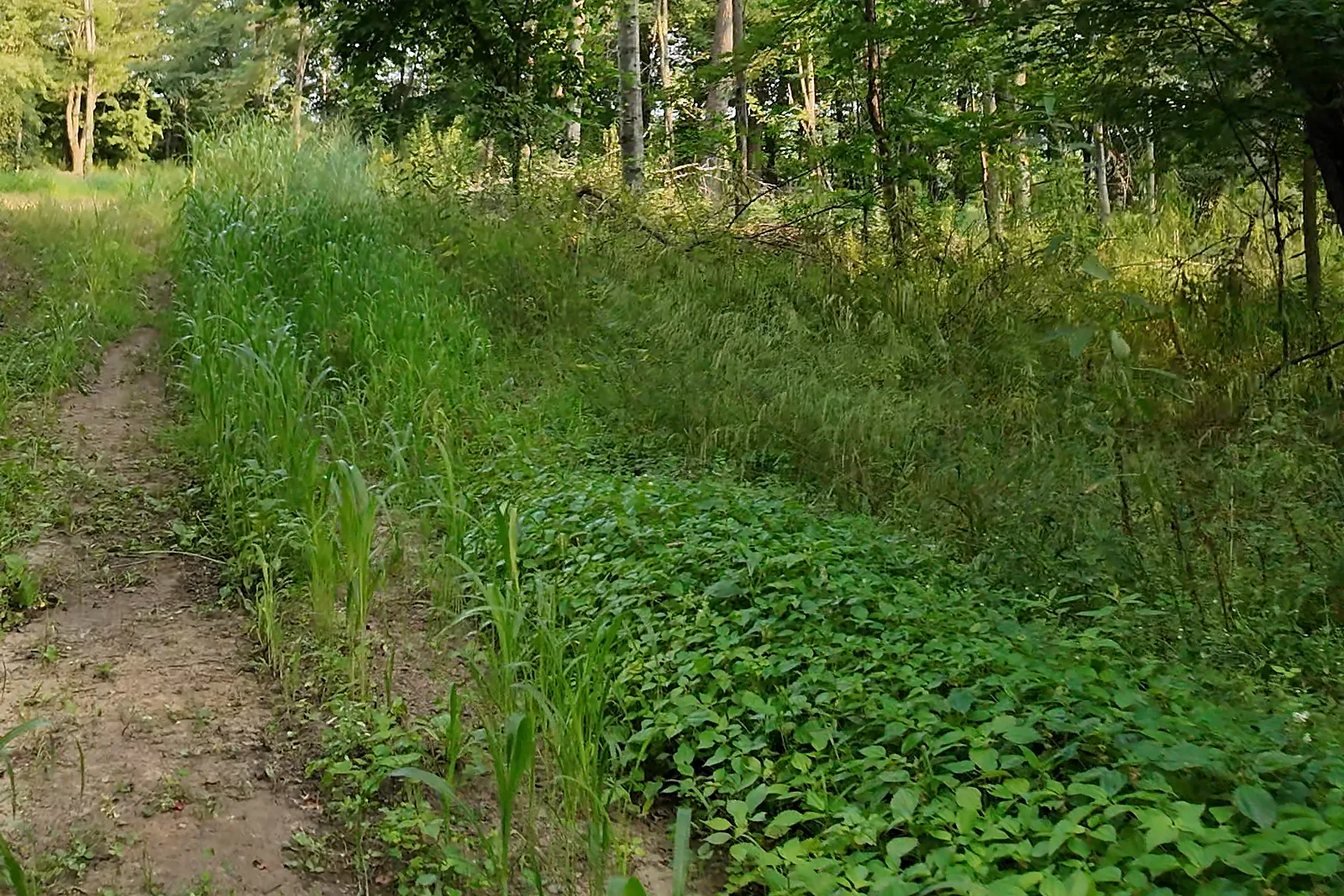
Every fall, plenty of hunters drag a disc across a sandy clearing, broadcast a bag of seed, and hope it rains. Sometimes it works. Often the plot comes up thin, weeds win, and the soil gets a little poorer every year. No-till is a different way of thinking: instead of turning the ground over, you leave it covered, keep the soil structure intact, and get seed into the ground with as little disturbance as possible.
It is not magic, and it is not one-size-fits-all. But on a lot of Central Wisconsin ground, especially the lighter soils common across Waushara County, it is worth understanding.
Why reduce tillage at all?
- Moisture. Residue on the surface shades the soil and slows evaporation. On droughty sandy ground, that can be the difference between a plot that germinates and one that doesn't.
- Erosion. Bare, worked soil blows and washes. Covered soil stays put.
- Soil biology. Earthworms, fungi, and the root channels left by previous plants all do work for you. Repeated tillage breaks that system up.
- Weed seed bank. Every pass with a disc brings a fresh batch of buried weed seed to the surface. Leaving it buried is one of the simplest weed controls there is.
- Time and equipment. Fewer passes means less fuel, less wear, and less time on the tractor.
Start with the site, not the seed
Before you buy anything, walk the spot. How much sun does it actually get? Plots tucked against tall timber on the south side can lose hours of light. Is it low and wet in spring, or a sand knob that burns up in August? How will you get in and out to hunt it without bumping deer from bedding? The best seed blend in the world won't fix a plot in the wrong place.
Get a soil test first
A soil test is the cheapest decision you'll make all year. pH is usually the first limiting factor on Wisconsin food plots, and lime takes time to react, so you want to know where you stand months ahead of planting. We walk through how to pull a good sample in Soil Testing Your Food Plot.
Dealing with what's already growing
No-till still means you have to manage the existing vegetation. Common approaches include:
- Terminating with herbicide before planting, following the label exactly.
- Roller-crimping a tall cover crop like cereal rye so it lies down as a mulch mat.
- Mowing after broadcasting seed so the cut material covers it ("throw and mow").
Which one fits depends on what's growing, your equipment, and your plan for the plot. When you combine them, the research-backed order is spray, drill, then crimp. Spray the standing cover, drill into it while it's still standing, then crimp right behind the drill in the same direction. Drilling standing cover gets better seed-to-soil contact than pushing through a flattened mat, and spraying before you seed means you never spray over new seedlings. The reasoning is in spray, crimp, no-till.
Seed-to-soil contact is everything
A no-till drill cuts a slot, drops seed at a set depth, and closes it. That's the most reliable way to get good germination through residue. Without a drill, small seeds like clover and brassicas can be broadcast just ahead of rain, and larger seeds like cereal grains can work with throw-and-mow if you have a thick layer of thatch to cover them. Planting depth matters: small seeds generally want to be shallow, larger seeds deeper.
Need a used no-till drill, disc, cultipacker, or ATV implement to get that seed-to-soil contact? Browse food plot equipment for sale on the Wisconsin Dirt Land Board, or list yours free.
Timing in Central Wisconsin
Fall plots are a balance between giving plants enough growing days and planting into soil moisture. Brassicas generally need more growing days than cereal grains, so they typically go in earlier in late summer, while rye, oats, and wheat are more forgiving later. Exact windows vary year to year and field to field. Watch the forecast and plant ahead of rain rather than to a calendar date.
Be patient
The first no-till season on worn-out ground can look underwhelming. Soil that has been disced for years has to rebuild structure and biology, and that takes more than one season. Plots that stay covered and fed tend to get better over time, and that's the goal.
Every property is different
Soils, deer density, neighbors, and goals vary. What works on one 40 won't automatically work on the next. If you want a second set of eyes on your ground, habitat consulting starts with a walk-through.
Plan the plot for your Wisconsin county
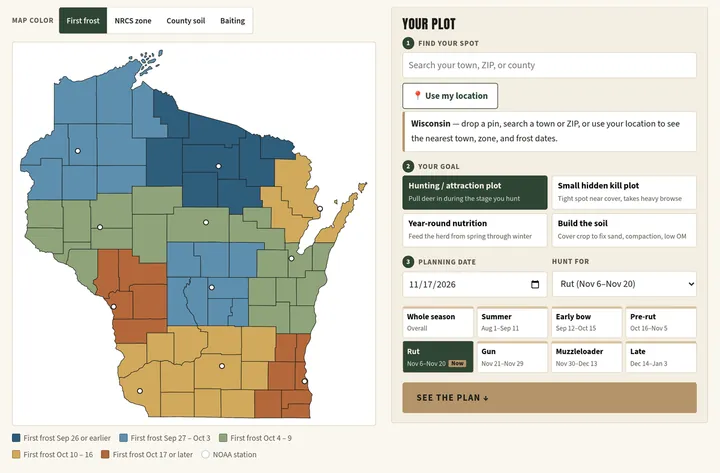
For frost dates and planting windows in your county, open the Wisconsin Food Plot Map or print the free Wisconsin Food Plot Planner. See also Wisconsin food plot planting dates by county, best food plots for Wisconsin deer, and spring food plots in Wisconsin.
Quick answers
When should I plan a no-till food plot in Wisconsin?
Winter is the time to soil-test, lime, and fill out the free Wisconsin Food Plot Planner. Spring oats and clover go in when the seedbed is fit; fall brassicas in the Central Sands belong in the last week of July and first days of August (about Jul 26–Aug 5 at Hancock). Oats and peas can go in through about Sep 4, and rye later still.
Does no-till work on Central Wisconsin sand?
Yes — residue and cover are a big reason to reduce tillage on light soils, because they hold moisture and cut erosion. Start with site and a soil test, then get seed-to-soil contact with a drill or a firm, shallow broadcast.
General educational information only, not professional, legal, or engineering advice for a specific property. Always follow product labels and check current county and state requirements.