
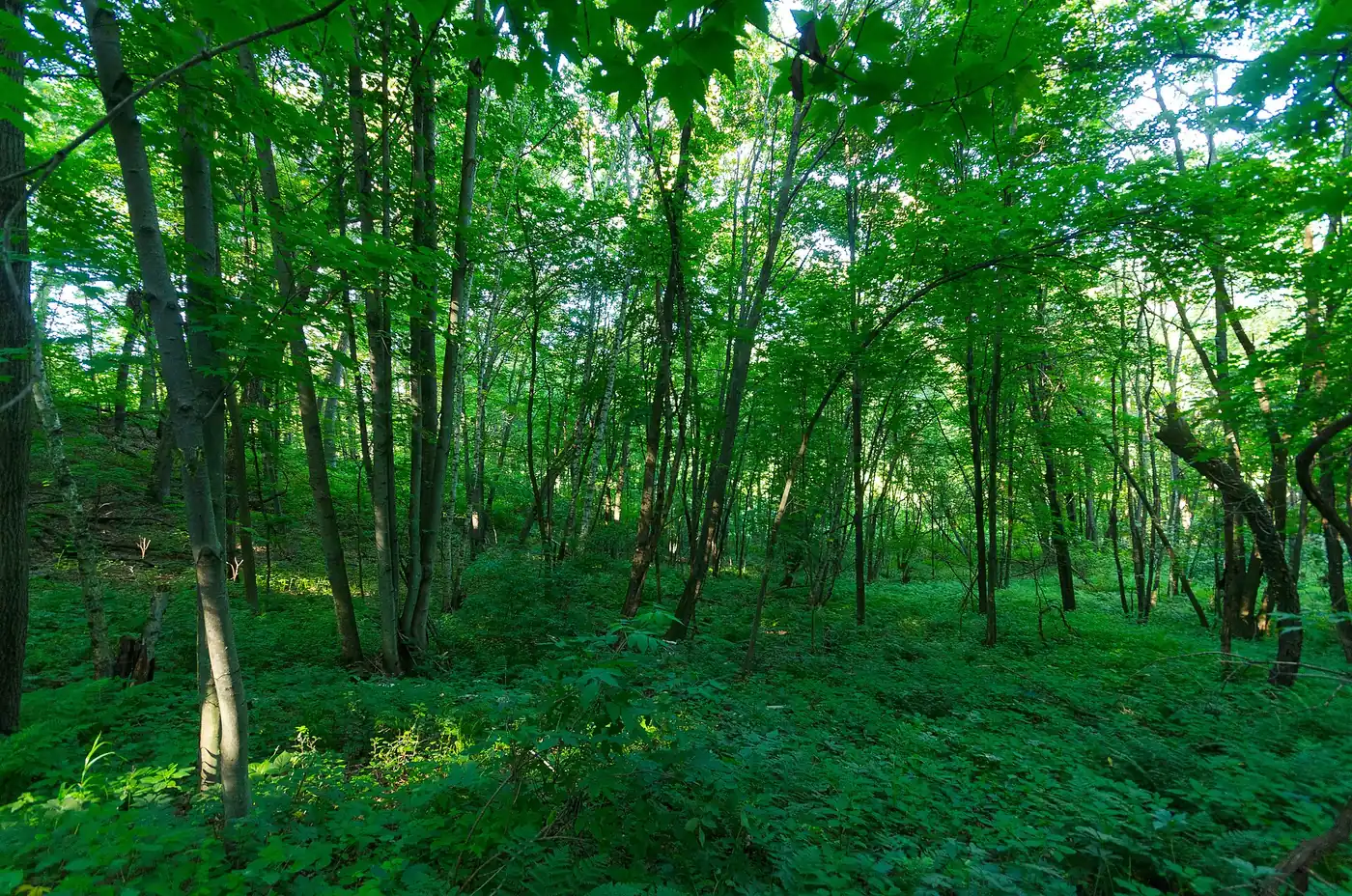
Habitat & TSI
Food is only part of it. Bedding and screening cover, timber work, and how you get in and out of your stands decide how deer use a property. Here’s where to start, and who to call before you cut.
Start here
- Cover is often the missing piece. Timber work, native grasses, shrubs, and screening plantings can all create it. Habitat planning.
- Timber stand improvement (TSI) means working the woods on purpose: thinning, release cuts, and similar work. NRCS treats it as a formal conservation practice (Forest Stand Improvement, code 666), and NRCS Wisconsin offers technical help and cost-share programs for landowners.
- Winter is timber season. It’s a good time for hinge cutting and timber work where appropriate. Talk to a forester first. UW–Madison Extension Forestry & Wildlife and the Wisconsin DNR Forest Landowners pages are good places to start.
- Enrolled in MFL? Check before you cut. MFL obligations include following the management plan and filing a cutting notice before a harvest. MFL for land buyers.
- Access is habitat too. Plan entry and exit routes, stand locations, and sanctuary so you can hunt without burning the property out. Access questions to ask.
- Feeding and baiting rules vary by county with CWD. Check the DNR before you put anything out. CWD and baiting by county.
Articles & field notes
- Managed Forest Law for Hunting Land Buyers
What Wisconsin's Managed Forest Law means when you buy hunting land: open vs. closed acres, tax rates, transfer paperwork, and withdrawal taxes.
- Buying Hunting Land in Waushara County: A Checklist
What to check before buying hunting land in Waushara County and Central Wisconsin: access, boundaries, zoning, MFL, wetlands, soils, and habitat.
- Buying Hunting Land in Central Wisconsin: What to Look For
What to look for when buying hunting land in Central Wisconsin: access, huntability, cover, water, soils, buildability, and Managed Forest Law status.
- CWD Zones & Baiting Rules by County, Wisconsin (2026)
2026 DNR baiting and feeding status, CWD sampling, and test results for Waushara, Waupaca, Marquette, Green Lake, Adams, Portage & nearby counties.
- Best Food Plots for Wisconsin Deer
The best food plot for Wisconsin deer depends on soil, county frost dates, and when you hunt. See season-by-season mixes and plan yours on the free map.
- No-Till Food Plots in Central Wisconsin
How no-till food plots work on Central Wisconsin ground: site choice, soil tests, terminating cover, seed-to-soil contact, and realistic expectations.
Tools & help
Habitat consulting Book a consult
Wisconsin Dirt habitat consulting covers bedding cover, screening, edge, water, and timber improvements, plus access plans. It is separate from real estate brokerage services. For a timber harvest or a formal forest management plan, work with a professional forester.
Sources
Facts on this page are summarized from the Wisconsin Dirt articles linked above and from these public sources. Check the current version before you act on anything.
- USDA-NRCS, Forest Stand Improvement (666) Conservation Practice Standard
- USDA-NRCS Wisconsin (technical and financial help for landowners)
- UW–Madison Division of Extension, Forestry & Wildlife (woodland owner resources)
- Wisconsin DNR, Forest Landowners
- Wisconsin DNR, Managed Forest Law
- Wisconsin DNR, Baiting and feeding regulations