Part of our Wisconsin Food Plots guide — dates, seed and soil by season.
There is no single best food plot for Wisconsin deer. The mix that works on southern silt loam can burn up on Central Sands, and a July soybean plot will not be what deer are eating during the nine-day gun season. Match the forage to your soil, your county frost dates, and the weeks you actually sit in a stand.
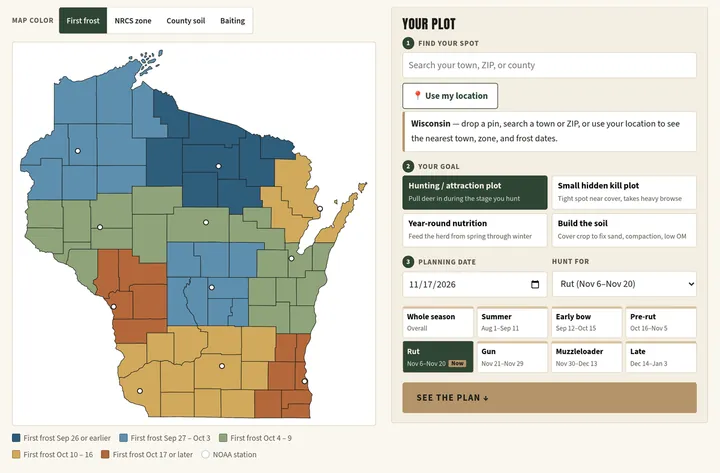
Use this page to pick a direction, then let the Wisconsin Food Plot Map rank forages for your county and the free Wisconsin Food Plot Planner put site, soil, seed, timing, and layout on one page.
Best food plots for Wisconsin deer, by season
| When you hunt | Forages that usually draw | Notes |
|---|---|---|
| Summer and early archery | Clovers, alfalfa (if pH and drainage allow), soybeans | Protein and leaf. Soybeans need warm soil (about 50°F) and protection from over-browse on small plots. |
| Pre-rut through gun season | Winter peas, oats, brassica leaves (rape, kale, turnip) | This is the classic Wisconsin fall attraction plot. Peas can be eaten to dirt on a small plot — plant them big or cage a corner. |
| Late gun season and winter | Brassica bulbs, sugar beets, standing corn or standing soybeans, cereal rye that is still green | By late November, soybeans have often dropped leaves and alfalfa is frozen down. Put late food close to cover. |
| Year-round nutrition | A perennial clover or alfalfa paddock plus a separate fall annual plot | Don’t ask one acre to do every job. Split destination food from the small kill plot. |
Best food plot mix for sandy Central Wisconsin ground
On Plainfield sand and other Central Sands soils in Waushara, Adams, and Marquette counties, drought, low organic matter, and low pH usually matter more than the brand name on the bag. A cereal-grain base — winter rye and oats — with a modest brassica share, and clover only where pH has been corrected, is the mix that still survives a dry August. Read the full best food plot mix for Central Wisconsin sandy soil and the Central Wisconsin summer and fall blends.
Best food plots for northern Wisconsin
North of the tension zone, the frost-free season at Rhinelander is only about 125 days (median last spring frost May 22, first fall frost September 24). Fall brassicas need to go in early August, not late August. Spring oats and clover start later than they do around Madison. Short-season, cold-tolerant species — oats, peas, brassicas, cereal rye, and red clover — beat heat-loving summer annuals that barely get started. See food plots in northern Wisconsin.
Best food plots for southern Wisconsin
Madison, Lancaster, and the Mississippi River corridor have a longer runway (162–177 frost-free days at those stations; even longer on the Lake Michigan shore). That opens a later fall brassica window and a more realistic shot at alfalfa or a full soybean plot if drainage and pH are there. See food plots in southern Wisconsin.
Start with soil, then seed
pH is usually the first thing holding a Wisconsin food plot back, especially on sand. Pull a fertility sample the way UW Extension describes it — the soil testing guide walks through it — and give lime months to react when you can. This is how to use a lab report, not a substitute for one.
Wisconsin food plot seed: buy for the job, not the label
Look past “deer mix” branding and check species, rates, and the planting date. A blend with a heavy cereal rye share will take over a fall plot; a pea-heavy blend will get grazed harder. The map’s seed rates and the planner’s worksheet are built to make that choice on paper before you buy a bag of Wisconsin food plot seed.
Sources
- NOAA National Centers for Environmental Information, U.S. Climate Normals 1991–2020, freeze/frost dates (32°F) at the stations listed
- USDA-NRCS Wisconsin, Cover Crops (340) Guidance Document NRCS-GD-340 WI (08-1-2025): zones, germination temperatures, and planting-date guidance
- UW–Madison Extension, A1525 Table 13: Planting rate and date for forages in Wisconsin
- National Deer Association, When to Plant Fall Food Plots, and What to Do If They Fail
- Wisconsin Dirt, Best Food Plot Mix for Central Wisconsin Sandy Soil
- Wisconsin DNR, Baiting and feeding regulations
Quick answers
What is the best food plot for Wisconsin deer?
There isn’t one mix that wins everywhere. Match the forage to your soil and to the weeks you hunt: clovers, alfalfa, and soybeans for summer and early archery; winter peas, oats, and brassica leaves from pre-rut through gun season; bulbs, standing grain, and rye later. On Central Sands ground, start with rye, oats, and a modest brassica share.
What is the best food plot seed for northern Wisconsin?
Favor short-season, cold-tolerant species — oats, winter peas, brassicas, cereal rye, and medium red clover — and plant the fall plot in early August. Heat-loving summer annuals have a short window north of Wausau and Rhinelander.
Are food plots legal in Wisconsin?
Yes, planted food plots on private land are legal statewide, including in counties with a CWD baiting and feeding ban. Wisconsin DNR treats standing crops differently from bait or feed. Food plots are not allowed on DNR-managed land. Confirm current rules on the DNR baiting map.
How do I pick a mix for my county?
Open the free Wisconsin Food Plot Map, drop a pin, pick a goal and a hunt date, and you will get a ranked forage list, frost dates, and seed rates for that county. Then fill out the free Wisconsin Food Plot Planner so the plan is on paper.
Print the plan with the free Wisconsin Food Plot Planner, or drop a pin on the Wisconsin Food Plot Map for frost dates and planting windows in your county.
Need a used food plot drag, disc, cultipacker, no-till drill, or ATV implement? Browse food plot equipment for sale on the Wisconsin Dirt Land Board, or list yours free.
General educational information only, not professional, legal, or engineering advice for a specific property. Always follow product labels and check current county and state requirements. Fertility testing (pH, lime, phosphorus, and potassium) is different from septic soil and site evaluations.